


Do You Need a Permit to Install a Mini Split in Ontario?
Do you need a permit to install a mini split in Ontario? Yes — in almost every case, you do. Most mini split installations in Ontario require up to three separate permits or notifications, depending on the scope of work involved.
Quick Answer: Permits Required for Mini Split Installation in Ontario
| Permit / Notification | Who Requires It | When It Applies |
|---|---|---|
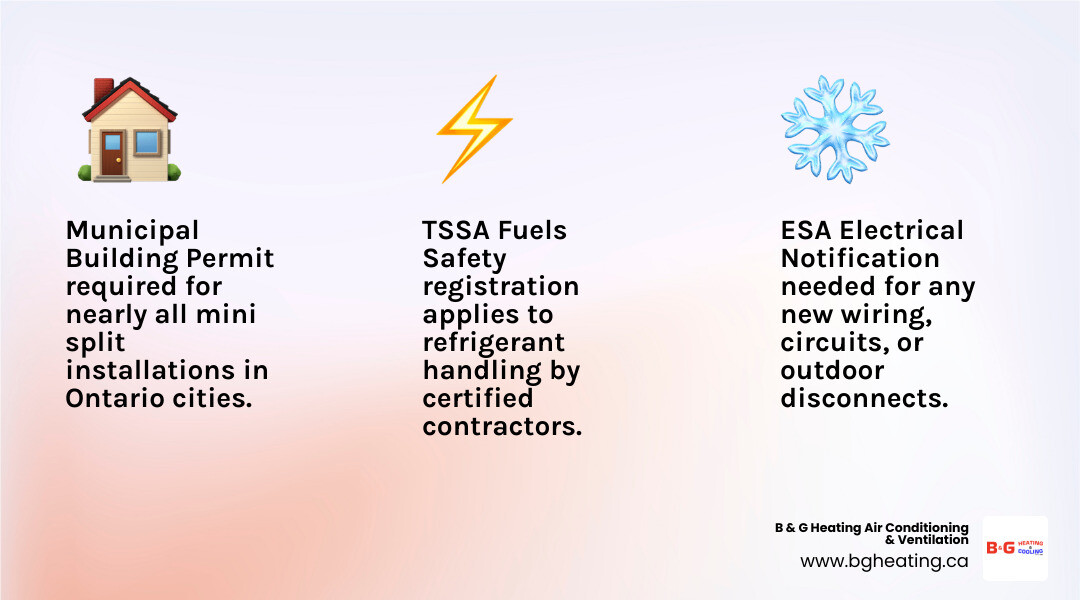
| Municipal Building Permit | Your local city or municipality | Nearly all mini split installations |
| ESA Electrical Notification | Electrical Safety Authority (ESA) | Any new wiring, circuits, or outdoor disconnects |
| TSSA Fuels Safety | Technical Standards and Safety Authority | Gas-related work; refrigerant handling as required by applicable regulations |
Most Ontario homeowners are surprised to learn that installing a ductless mini split isn’t a simple plug-and-play project — at least not from a regulatory standpoint. Even though mini splits don’t use ductwork, they still involve electrical connections, refrigerant lines, and mechanical modifications to your home that fall under the Ontario Building Code (OBC).
Skipping permits isn’t just a paperwork problem. It can affect your home insurance, your ability to sell your home, and even your manufacturer warranty. The good news is that understanding what’s required — before the first hole is drilled — makes the whole process far less stressful.
This guide breaks down exactly what permits apply, how the process works across major Ontario cities, and what happens if you try to skip steps.
Do You Need a Permit to Install a Mini Split in Ontario?
When we talk about whether do you need a permit to install a mini split in Ontario, we have to look at the intersection of municipal laws and provincial safety standards. In cities like Hamilton, Mississauga, and Burlington, a mini split installation is often categorized as a mechanical project. This means that even if you aren’t doing a full home renovation, the addition of an air conditioning or heat pump unit may require a building permit.

The Ontario Building Code (OBC) is the primary driver here. It requires many HVAC alterations—including adding a ductless system—to be reviewed for safety, placement, and energy efficiency compliance. Beyond the building permit, the Electrical Safety Authority (ESA) must be notified because a mini split typically requires a dedicated 240-volt circuit and an outdoor disconnect switch. The Technical Standards and Safety Authority (TSSA) may also apply where regulated mechanical or fuel-related work is involved.
For those looking for Professional Ductless Mini Split Hvac Services, it helps to know the permit process is there to protect the homeowner. It helps confirm the unit is properly sized for your space and that the installation won’t create electrical, structural, or safety concerns.
Why do you need a permit to install a mini split in Ontario for your cottage?
Cottage country, from the shores of Lake Erie to the rural areas around Haldimand County, has its own unique set of challenges. If you are building a new cottage or doing a major conversion, the question of do you need a permit to install a mini split in Ontario becomes even more important due to SB-12 compliance.
The Ontario Building Code’s SB-12 package sets energy efficiency requirements for residential buildings. In some cases, if a mini split is intended to be the primary heat source, municipal inspectors may require additional ventilation measures, such as an HRV system, to help ensure proper air exchange. Rural municipalities may also take a closer look at these requirements because cottages are often located in colder design temperature zones. A system that works in Hamilton may need more careful design review in a more northern or exposed rural environment.
Can homeowners DIY and do you need a permit to install a mini split in Ontario?
We often see “DIY-friendly” mini split kits marketed online, leading many homeowners to ask if they can skip the professional route. While an owner-builder can sometimes apply for a municipal building permit, the electrical work still requires ESA notification and inspection where applicable.
The biggest risk of DIY is liability. If an unpermitted, self-installed unit causes a fire or another safety issue, your insurance provider may deny your claim. Additionally, many manufacturers require professional installation and proper documentation for warranty coverage.
The Three Essential Permit Layers for Ontario Homeowners
Navigating the paperwork can feel like a maze. To make it easier, we break down the three distinct layers of oversight that apply to your project.
| Layer | Authority | Focus Area |
|---|---|---|
| Municipal | Local City Hall | Structural, Noise, Zoning, and Building Code (OBC) |
| Electrical | ESA | Wiring, Breakers, and Outdoor Disconnects |
| Fuels/Mechanical | TSSA | Regulated mechanical or fuel-related requirements, where applicable |
By ensuring all three layers are addressed, you can enjoy your Ductless Mini Split Hvac Services Hannon On with total peace of mind.
Electrical Safety Authority (ESA) Notifications
The Electrical Safety Authority is responsible for ensuring all electrical work in Ontario meets the Ontario Electrical Safety Code. For a mini split, this involves:
- Installing a new, dedicated 240V circuit from your electrical panel.
- Mounting an outdoor weather-proof disconnect switch near the condenser.
- Proper grounding and bonding of the equipment.
A Licensed Electrical Contractor (LEC) typically files a notification of work with the ESA. Once the job is done, an inspector may visit to verify the wiring is safe.
TSSA Fuels Safety and Refrigerant Handling
While mini splits are electric, certain aspects of mechanical work may still fall under TSSA oversight depending on the scope of the installation. This doesn’t always mean a separate homeowner permit is needed, but it does mean the work should follow all applicable provincial requirements so the system is installed safely and properly.
Municipal Requirements and the Application Process
Each city has its own nuances. If you live in Toronto, the city requires a Stand-alone Mechanical (HVAC) permit with a flat fee (as of 2026). In Mississauga or Hamilton, the process might involve a more detailed review of where the unit is placed to ensure it doesn’t violate noise bylaws or setback requirements from your neighbor’s property line.
Required Documentation and Calculations
When we apply for a permit on behalf of a homeowner, it’s not just a one-page form. To Maximize Comfort Ductless Mini Split Systems, the municipality usually requires:
- Heat Loss/Gain Calculations: Proof that the unit is sized correctly for the room.
- Mechanical Layouts: A drawing showing where the indoor and outdoor units will be placed.
- Equipment Specifications: Details from the manufacturer showing energy ratings and noise levels.
- Schedule 1 Designer Information: A form signed by a qualified designer (often the HVAC company) taking responsibility for the design.
Timelines for Permit Approval
The Ontario Building Code Act mandates a 10-business-day response time for complete municipal building permit applications for houses. However, “complete” is the keyword. If the drawings are missing details, the clock resets. In major hubs like Toronto or Mississauga, the total timeline from application to having the permit in hand often takes about 2 to 3 weeks for simple residential alterations.
Risks of Skipping Permits for Ductless Systems
It might be tempting to save time by skipping the permit, but the long-term risks are significant.
Impact on Manufacturer Warranties
Manufacturers are often strict about installation requirements. If you ever have a compressor failure or a board issue, one of the first things requested may be proof of professional installation. If you cannot provide permit documentation or a receipt from a qualified contractor, warranty coverage may be affected.
Building Code Compliance and Inspections
If a neighbor complains about the noise of your outdoor unit, or if a city inspector spots a new condenser while visiting for another reason, you could face enforcement action. More importantly, unpermitted work can create issues when it comes time to sell your home. A buyer’s home inspector or lawyer may check for permits. If the mini split isn’t permitted, you might be forced to obtain a retroactive permit, which can involve additional inspections and opening up finished areas for review.
Frequently Asked Questions about Ontario Mini Split Permits
Who is responsible for pulling the permits?
In a professional arrangement, the contractor should handle the permit applications. It is a major red flag if a contractor asks you to pull the permit as the homeowner. This often means they aren’t properly licensed or registered with the TSSA or ESA. When the contractor pulls the permit, they take the legal liability for the work meeting the code.
Do mini splits qualify for Ontario rebates?
Yes, but there is a catch: permits and professional audits are often mandatory for eligibility. Programs like the Canada Greener Homes Grant or utility-specific incentives usually require a pre-installation EnerGuide audit. If the installation isn’t done to code (which the permit proves), you could be disqualified from receiving thousands of dollars in rebates.
Are there differences for cold-climate mini splits?
Cold-climate mini splits are designed to be primary heat sources in Ontario’s harsh winters (rated down to -25°C or lower). Because they serve as a primary heating system, municipal inspectors look closer at the “backup” heat source and the overall insulation of the home to ensure you won’t be left in the cold during a power outage or extreme weather event.
Conclusion
So, do you need a permit to install a mini split in Ontario? Absolutely. From ensuring your family’s safety to protecting your home’s resale value, the permit process is a vital part of a successful HVAC upgrade.
At B & G Heating Air Conditioning & Ventilation, we take the stress out of the process. As a family-owned business serving Hamilton and the surrounding regions—including Stoney Creek, Ancaster, and Burlington—we handle the technical details and ensure every installation is fully compliant with the Ontario Building Code. We pride ourselves on quality workmanship and making sure your home stays comfortable all year round.
If you’re ready to upgrade your comfort, contact us today for Professional Ductless Mini Split Hvac Services. We’ll help you navigate the permits and get your new system running perfectly.