


Why Knowing How to Maintain a Ductless Mini Split in a Canadian Climate Matters
Knowing how to maintain a ductless mini split in a Canadian climate is one of the most practical things you can do to protect your home comfort system. Canada’s winters hit hard, summers bring humidity and pollen, and everything in between puts real stress on your equipment. Without consistent care, a neglected heat pump can lose up to 25% of its efficiency — meaning higher energy bills and a shorter lifespan.
Here’s a quick overview of the core seasonal maintenance steps Canadian homeowners should follow:
Quick Answer: How to Maintain a Ductless Mini Split in a Canadian Climate
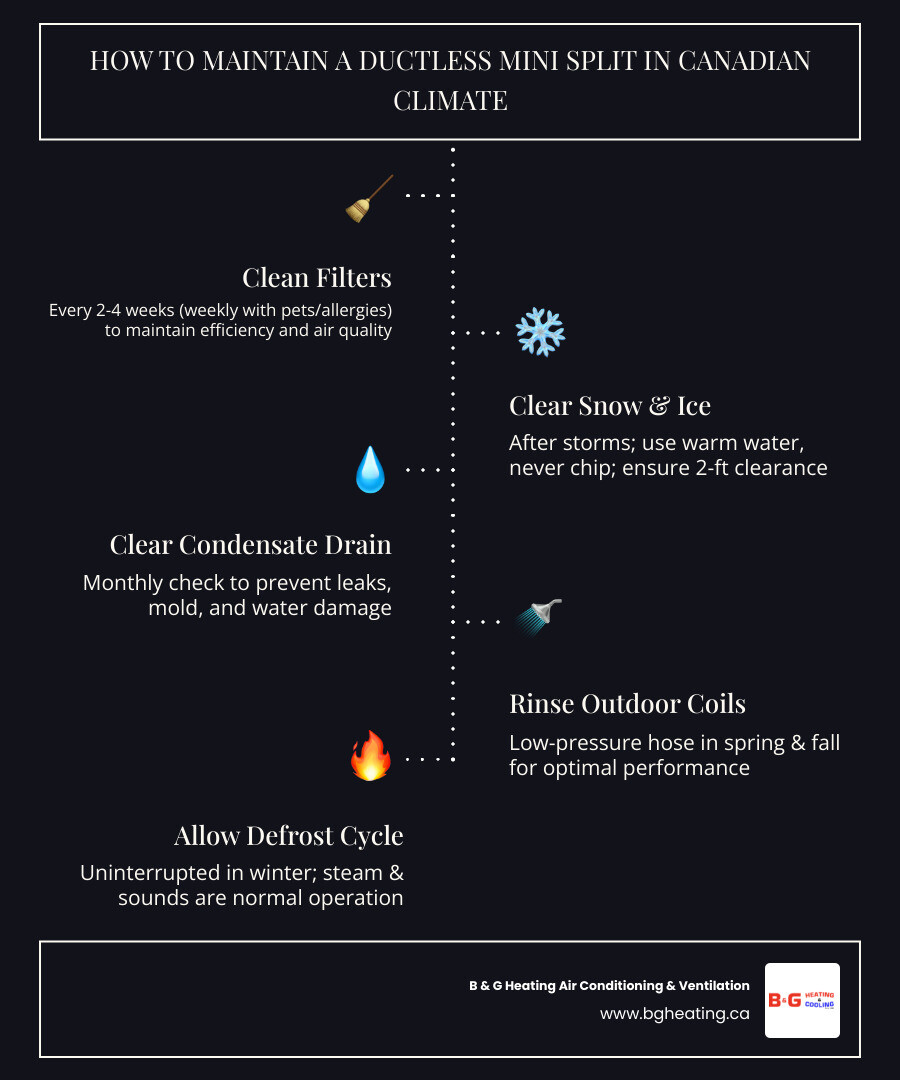
- Clean air filters every 2–4 weeks (weekly if you have pets or allergies)
- Clear snow and ice from the outdoor unit after every major storm — never chip at ice; use warm water
- Keep at least 2 feet of clearance around the outdoor unit year-round
- Check and clear the condensate drain monthly to prevent leaks and mould
- Rinse outdoor coils with a low-pressure garden hose each spring and fall
- Let the defrost cycle run uninterrupted in winter — the steam and bubbling sounds are normal
- Book a professional tune-up twice a year — once in spring before cooling season, once in fall before heating season
The good news? Most of this is straightforward DIY work. Think of it like regular oil changes for your car — simple habits that prevent expensive problems down the road. Still, some tasks need a trained eye, and that’s where professional bi-annual service earns its keep.
Why Proactive Care is Vital for Canadian Heat Pumps
As we move through May 2026, we’ve seen how the fluctuating weather in Southern Ontario — from the humid shores of Burlington to the snowy heights of Hamilton — can take a toll on HVAC systems. Proactive care isn’t just a suggestion; it’s a necessity for several reasons.
First, there is the matter of efficiency loss. A neglected heat pump can use up to 25% more energy to provide the same amount of heating or cooling. In a Canadian winter, where your unit is working overtime to extract heat from sub-zero air, that efficiency gap translates directly into higher utility bills. Conversely, regular maintenance can save up to 15% on energy bills for high-efficiency systems like Daikin.
Second, lifespan extension is a major factor. A well-maintained mini-split system can last 15 to 20 years. Neglect, however, causes internal components like the compressor and fan motor to work harder, leading to premature failure. By investing in Professional Ductless Mini Split Hvac Services, you are protecting a significant investment in your home.
Finally, air quality and component wear are closely linked. In our local area, dust, pet dander, and seasonal pollen can clog the indoor evaporator coils. This doesn’t just make the air “stuffy”; it can lead to moisture buildup and mould growth. Regular cleaning ensures the air your family breathes remains crisp and clean.
How to Maintain a Ductless Mini Split in a Canadian Climate

Maintaining your system involves a blend of simple “housekeeping” tasks and technical inspections. For residents in our service areas like Stoney Creek, Grimsby, and Waterdown, we recommend a routine that addresses both the indoor air handlers and the outdoor condenser.
Indoor Unit Cabinet and Filter Care Start by wiping down the exterior of your indoor units with a soft, dry cloth. Dust can accumulate on the louvers and sensors, affecting the unit’s ability to read the room temperature accurately.
The most critical DIY task is filter maintenance. Most ductless systems feature washable filters. To clean them, simply turn off the unit, pop open the front panel, and slide the filters out. You can vacuum away loose dust or wash them with mild soap and room-temperature water. Ensure they are completely dry before sliding them back in. If you are in the Hannon area and need a hand with a more thorough system check, our Ductless Mini Split Hvac Services Hannon On/ can help ensure everything is seated correctly.
Coil Inspection While the filters catch the big stuff, fine dust can still reach the evaporator coils. Periodically check the coils (the metal fins behind the filters) for any signs of dirt or “fuzz.” If they look dirty, it’s usually time to call us for a deep clean, as these fins are delicate and easily damaged by improper scrubbing.
DIY vs. Professional Maintenance: What’s the Difference?
| Task | DIY | Professional |
|---|---|---|
| Clean/Wash Air Filters | Yes | Included |
| Clear Outdoor Debris/Snow | Yes | Included |
| Wipe Indoor Cabinet | Yes | Included |
| Clear Clogged Drain Line | Basic | Deep Flush |
| Check Refrigerant Levels | No | Yes |
| Inspect Electrical Connections | No | Yes |
| Test Capacitor & Amp Draw | No | Yes |
| Deep Clean Blower Wheel | No | Yes |
How to maintain a ductless mini split in a Canadian climate with pets or allergies
If you share your home with furry friends or suffer from seasonal allergies, your maintenance schedule needs to be more aggressive. Pet hair and dander are the “kryptonite” of mini-split filters. In a home with pets, we suggest checking filters every single week.
For enhanced air quality, many modern units utilize titanium apatite photocatalytic filters. These are specialized filters that trap microscopic particles and decompose odours. These usually require cleaning every six months and a full replacement every three years. Using high-quality indoor air quality (IAQ) products, like standalone air purifiers, can also reduce the load on your mini-split, keeping the internal components cleaner for longer.
How to maintain a ductless mini split in a Canadian climate during winter
Winter is the true test for any heat pump in Ontario. The outdoor unit needs to “breathe” to extract heat from the air.
- Snow Removal: After a heavy snowfall in places like Hamilton or Ancaster, ensure the outdoor unit isn’t buried. Use a broom to gently brush snow off the top and sides.
- The 2-Foot Rule: Maintain at least two feet of clear space around the outdoor unit in all directions. This prevents air recirculation, which can cause the unit to freeze up.
- Ice Buildup: It is normal to see some frost on the coils, but heavy ice “armour” is a problem.
- Base Pan Heaters: If your unit doesn’t have one, we can often install a base pan heater to prevent meltwater from refreezing and damaging the fan blades.
Winter-Proofing for Extreme Cold, Snow, and Ice
One of the most common calls we get during a cold snap in Burlington or Oakville is: “My unit is smoking and making a gurgling sound!”
Don’t panic! This is actually the defrost cycle in action. To Maximize Comfort Ductless Mini Split Systems, the unit occasionally reverses its operation to send heat to the outdoor coils, melting any accumulated frost. This process usually lasts 3 to 10 minutes. The “smoke” you see is actually steam, and the sounds are just refrigerant shifting directions.
Safe Ice Prevention If you notice a thick layer of ice that won’t go away, never use a screwdriver, ice pick, or hammer to chip it off. You risk puncturing the refrigerant lines, which leads to a very expensive repair. Instead, use the “warm water method.” Pouring lukewarm (not boiling) water over the ice is a safe way to melt it.
Drainage Paths Ensure the area underneath the outdoor unit allows water to drain away. If the unit is sitting directly on the ground, ice can build up from the bottom up. We often recommend mounting units on wall brackets or raised stands to keep them above the snow line and provide a clear path for defrost meltwater.
Summer Maintenance for High Humidity and Pollen
When the Ontario humidity hits in July and August, your mini-split switches from a heater to a powerful dehumidifier. As it pulls moisture out of the air, that water collects in a drain pan and exits through a condensate pipe.
Clearing Clogged Drains A clogged drain is the #1 cause of water leaking down your interior walls. Dust and pollen can mix with moisture to create a “sludge” that blocks the pipe. To prevent this, you can check the end of the drain line outside. If you see standing water or no water dripping while the AC is running hard, there might be a clog. A wet/dry vacuum held to the end of the outside pipe can often suck out the obstruction.
Outdoor Coil Rinsing In the spring, pollen from our beautiful Ontario trees can coat the outdoor coils like a blanket. This blocks airflow and forces the compressor to run hotter. Once a month during summer, turn off the power to the unit and gently rinse the outdoor coils with a garden hose. Use low pressure — a pressure washer will flatten the delicate aluminum fins and ruin the unit.
Professional Bi-Annual Tune-Ups and Troubleshooting
While DIY care keeps the system running week-to-week, there are things only a professional can handle. At B & G Heating, we’ve been serving the Hamilton area since we were founded as a family-owned business, and we know exactly what to look for in our local climate.
A professional bi-annual tune-up includes:
- Checking Refrigerant Levels: A small leak can cause the system to freeze up or stop heating. Only licensed technicians can handle refrigerant.
- Electrical Inspections: We check for loose connections, test capacitors (which help the motor start), and measure amp draws to ensure the motor isn’t overworking.
- Deep Cleaning: We use specialized bib kits to deep-clean the blower wheel and internal drain pan without making a mess in your living room.
- Sensor Calibration: Ensuring the unit accurately reads the temperature so you aren’t wasting energy.
When to Call Us Immediately:
- Unusual Noises: Grinding, squealing, or loud rattling.
- Musty Odours: This often indicates “Dirty Sock Syndrome” (mould buildup on the coils).
- Performance Drops: If the air coming out isn’t as hot or cold as it used to be.
- Icy Coils: If you see ice on the indoor evaporator coils.
Frequently Asked Questions about Ductless Maintenance
How often should I clean my mini split filters in Ontario?
In the standard Ontario home, we recommend cleaning filters every 2 to 4 weeks. However, during peak “pollen season” in the spring or if you live in a high-dust area (like near new construction in Brampton or Milton), checking them every two weeks is safer. If you have multiple pets, weekly is best. Clean filters can prevent up to 15% energy loss!
What should I do if my outdoor unit is covered in ice?
First, check your air filters. Believe it or not, a dirty indoor filter can cause the outdoor unit to freeze up. If the filters are clean, ensure the unit has 2 feet of clearance from snow. If it’s still iced over, try the warm water method to melt it. If the ice returns quickly, it may indicate a refrigerant leak or a faulty defrost sensor, and you should call for Professional Ductless Mini Split Hvac Services.
Why is my ductless unit leaking water inside my home?
This is almost always due to a clogged condensate drain line or the unit being slightly off-level. Dust, mould, or even small insects can block the drain pipe. When the water has nowhere to go, it overflows the internal pan and runs down your wall. Regular professional flushing of the drain line during your spring tune-up prevents this entirely.
Conclusion
Mastering how to maintain a ductless mini split in a Canadian climate doesn’t have to be a chore. By staying on top of filter cleanings, keeping the snow at bay, and ensuring your outdoor unit has room to breathe, you can enjoy whisper-quiet comfort all year long.
At B & G Heating Air Conditioning & Ventilation, we take pride in being a trusted, family-owned part of the Hamilton community. From Mississauga to Niagara-on-the-Lake, we help homeowners keep their systems in peak condition. Whether you need a quick repair in St. Catharines or a comprehensive seasonal tune-up in Brantford, we are here to provide quality workmanship and peace of mind.
Don’t wait for a breakdown in the middle of a January blizzard. Contact us today to schedule your Professional Ductless Mini Split Hvac Services and ensure your home stays comfortable, no matter what the Canadian weather throws your way!