


Why Dirty Ductwork Is a Hidden Threat to Indoor Air Quality in Canadian Homes
How dirty ductwork affects indoor air quality in Canadian homes is something most homeowners don’t think about — until someone in the family starts waking up congested, sneezing more than usual, or feeling worn down for no obvious reason.
Here’s a quick summary of the core impacts:
- Allergen circulation — Dust, pet dander, mold spores, and pollen build up inside ducts and get pushed into every room each time your HVAC runs
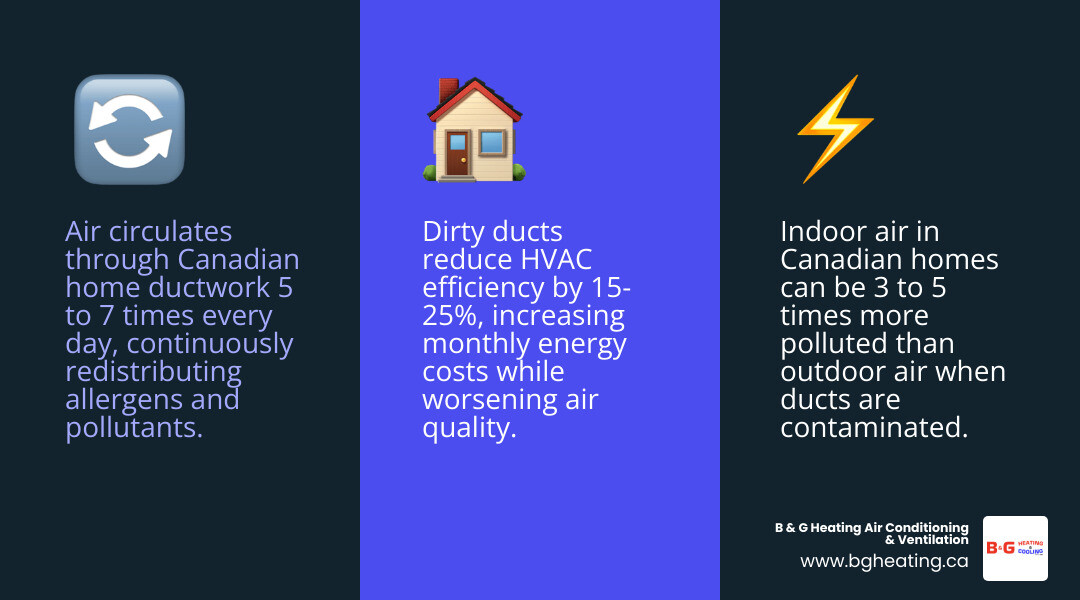
- Frequent exposure — Air circulates through your home’s ductwork 5 to 7 times per day, meaning contaminated ducts redistribute pollutants constantly
- Worse air than outside — Indoor air in Canadian homes can be 3 to 5 times more polluted than outdoor air, and dirty ducts are a key reason why
- Health risks — Respiratory symptoms, allergy flare-ups, morning congestion, and fatigue are all commonly linked to contaminated ventilation systems
- Energy costs — Restricted airflow from debris-clogged ducts can reduce HVAC efficiency by 15 to 25%, raising your monthly utility bills
- Climate factors — Ontario’s humid summers, cold winters, wildfire smoke, and basement moisture create conditions that accelerate duct contamination
Most people spend the majority of their time indoors, especially during Canada’s long winters. That makes the air inside your home matter more than almost any other environmental factor in your daily life. Yet the ductwork carrying that air — running silently behind walls, under floors, and through ceilings — is rarely inspected and even less often cleaned.
In Hamilton and across Ontario, homes face a specific set of challenges: high seasonal humidity, extended furnace operation, ragweed and pollen seasons, and increasingly, wildfire smoke events. All of these push more contaminants into your ventilation system and keep them circulating long after the source is gone.
This guide walks you through what’s actually inside dirty ducts, how it affects your health, and what Canadian homeowners can do about it.
Understanding How Dirty Ductwork Affects Indoor Air Quality in Canadian Homes
When we think about cleaning our homes, we focus on floors, countertops, and windows. However, the most active part of your home’s infrastructure is often the dirtiest. Your ductwork acts as the “lungs” of your property. Every time your furnace or air conditioner kicks on, it pulls air from your rooms, conditions it, and pushes it back out. If those passages are coated in debris, your HVAC system isn’t just moving air; it’s acting as a delivery system for pollutants.

In many Ontario households, the buildup inside these metal channels is a cocktail of daily life. It includes skin cells (which feed dust mites), pet hair, lint, and outdoor particulates that hitch a ride inside on our clothes. Over time, this layer of “fuzz” becomes a sticky mat that traps even more biological contaminants. Improve Your Air Ventilation Through Duct Maintenance and Cleaning is a vital step because once these particles settle in the ducts, they don’t just stay there—they are constantly agitated and redistributed into your breathing zone.
The Science Behind How Dirty Ductwork Affects Indoor Air Quality in Canadian Homes
The technical side of air quality often focuses on PM2.5—fine particulate matter that is 2.5 microns or smaller. These particles are particularly dangerous because they are small enough to bypass the body’s natural filters in the nose and throat, traveling deep into the lungs. Research has shown that uncleaned ducts can retain significantly higher levels of PM2.5, especially following events like regional wildfires or local construction.
When moisture is added to the mix—common in our humid Ontario summers—these dust layers become breeding grounds for bacteria and fungi. This isn’t just about “dustiness”; it’s about a living ecosystem of microorganisms that release spores and metabolic byproducts into your home. Utilizing Indoor Air Quality Services Hannon On can help identify if your system has become a reservoir for these microscopic threats.
Recognizing How Dirty Ductwork Affects Indoor Air Quality in Canadian Homes After Renovations
Renovations are a major milestone for any homeowner in Hamilton or Burlington, but they are also a primary cause of duct contamination. Drywall dust is particularly insidious; it is incredibly fine and can travel through the smallest gaps in floor registers. Even if you “seal” your vents with plastic, the fine silica and gypsum particles often find a way in.
Sawdust, carpet fibers, and volatile organic compounds (VOCs) from new paints or adhesives also get sucked into the return air vents. Once inside the dark, cool environment of your ductwork, these materials can linger for years, causing Common Ventilation Issues like persistent “new house” smells or a chalky film that reappears on furniture just hours after dusting.
Health Risks and Respiratory Symptoms Linked to Contaminated Vents
The connection between your vents and your health is direct. If you find yourself reaching for allergy medication even when the pollen count is low, or if your “cold” seems to last all winter, your HVAC system might be the culprit.
Common symptoms linked to how dirty ductwork affects indoor air quality in Canadian homes include:
- Morning Congestion: Waking up with a stuffy nose or a scratchy throat that clears up once you leave the house.
- Asthma Triggers: Frequent flare-ups or the need for rescue inhalers more often than usual.
- Unexplained Fatigue: Your body working harder to process poor-quality air can lead to lethargy and “brain fog.”
- Headaches: Often caused by the presence of mold spores or chemical residues circulating through the vents.
To combat biological growth, some homeowners turn to Indoor Air Quality UV Light Technology, which can neutralize bacteria and mold spores before they have a chance to circulate.
Vulnerable Populations in Ontario Households
While poor air quality affects everyone, certain groups in our community are at much higher risk. Children have higher respiratory rates than adults, meaning they breathe in more air—and more pollutants—relative to their body size. Their developing lungs are particularly sensitive to the irritants found in dusty ducts.
Similarly, elderly residents and those who are immunocompromised may find that dirty vents exacerbate chronic conditions like COPD or heart disease. For these families, ensuring the home is a sanctuary of clean air is a medical necessity. Many find that they can Achieve Comfort with Whole Home Ventilation Systems that actively exchange stale indoor air for filtered outdoor air, reducing the overall pollutant load.
Long-term Respiratory Impacts
Chronic exposure to “sick” building air isn’t just a temporary annoyance; it can have lasting effects. Long-term inhalation of dust mite waste, mold spores, and fine particulates can lead to decreased lung function and chronic sinusitis. Some research even suggests that poor indoor air can contribute to “accelerated aging” of the respiratory system.
By maintaining Whole Home Ventilation Systems, you aren’t just cleaning a machine; you are protecting the long-term health of your family’s lungs and immune systems.
The Impact of Canadian Climate and Wildfire Smoke on Your Ventilation
Canada’s climate plays a starring role in how dirty our ducts get. In recent years, the 2025 wildfire season brought unprecedented levels of smoke to Ontario. Even with windows closed, fine smoke particles (PM2.5) infiltrate homes through microscopic cracks and settle in the ductwork. Once the smoke clears outside, it often remains trapped in your vents, being blown back into your living space every time the fan turns on.
Furthermore, humidity management is a constant struggle in the Golden Horseshoe. We aim for a 30-50% moisture target. If the humidity in your ducts rises above this—often due to a leaky AC coil or a damp basement—dust turns into mud, providing the perfect substrate for mold. Proper Ventilation Improves Air Quality by ensuring that moisture doesn’t sit stagnant in your system.
Winter Heating Seasons and Dust Redistribution
During our long Ontario winters, our furnaces run almost continuously. This constant airflow keeps dust in a state of “perpetual suspension.” The dry winter air also increases static electricity, which can cause dust to cling to vent covers and the interior of the ducts. When the furnace blower kicks into high gear on a -20°C night, it can dislodge “dust puffs” that have been accumulating for months. Understanding the Six Important Factors to Install a Ventilation System in Your House is crucial for managing these seasonal shifts effectively.
Humidity and Microbial Growth in Ontario
Basements in areas like Hamilton and Stoney Creek are prone to dampness. Since many HVAC systems are located in the basement, any mold growth near the return air intake can quickly spread throughout the entire house. Musty odors are the first sign that biological growth is occurring. If you notice these smells primarily when the air is blowing, it’s a major red flag. Often, these issues are compounded by Signs of Leaky Air Ducts, which pull in damp, unconditioned air from crawlspaces or wall cavities directly into your breathing air.
Identifying Signs of Dirty Ducts and Improving HVAC Efficiency
Is your HVAC system working harder than it should? Dirty ducts don’t just hurt your health; they hurt your wallet.
| Feature | Clean Ductwork | Dirty Ductwork |
|---|---|---|
| Airflow | Unrestricted and even | Restricted by debris |
| Energy Efficiency | Peak performance (100%) | 15-25% efficiency loss |
| Dusting Frequency | Normal | Constant (surfaces dusty in hours) |
| System Lifespan | Maximized | Reduced due to component strain |
When dust clogs the blower motor or coats the evaporator coil, the system has to run longer to reach the temperature set on your thermostat. This leads to those mysterious energy bill spikes. Improving Home Air Flow by removing these obstructions is one of the fastest ways to restore your system’s efficiency.
Professional Cleaning Methods and Preventive Maintenance
A “quick vacuum” of your registers isn’t enough. Professional duct cleaning involves a systematic “source removal” process. This typically includes:
- Negative Pressure: A high-powered vacuum (often truck-mounted) is attached to the main trunk line, putting the entire system under suction.
- Agitation: Technicians use specialized brushes, air whips, and “snakes” to dislodge stuck-on debris from the walls of the ducts.
- HEPA Filtration: Ensuring that the dust removed isn’t simply blown back into your home.
- Antimicrobial Treatments: If mold is suspected, safe treatments can be applied to inhibit future growth.
For More info about duct maintenance, it’s always best to consult with experts who understand the specific layout of Ontario homes.
Homeowner Best Practices for Cleaner Air
While professional cleaning is essential every few years, your daily habits make a big difference.
- Filter Ratings: Use a high-quality pleated filter with a MERV rating of at least 8 to 11. Be careful not to go too high without checking your system’s capacity, as overly restrictive filters can damage your furnace motor.
- Monthly Checks: Inspect your filter every 30 days, especially during “high-use” months (January and July) or during wildfire smoke events.
- Source Control: Vacuum your floor registers regularly and keep pets groomed to reduce the amount of dander entering the returns.
- Proactive Care: Don’t wait for a breakdown. Regular Indoor Air Quality Services Hannon On can catch small issues before they become major health hazards.
Frequently Asked Questions about Air Quality and Ductwork
How often should Canadian homeowners clean their ducts?
Most experts recommend a professional cleaning every 3 to 5 years. However, you should move that timeline up to every 1 to 2 years if you have indoor pets, smokers in the home, residents with severe allergies, or if you have recently completed a home renovation project.
Can dirty ducts really increase my monthly energy bills?
Yes. When dust and debris accumulate on the sensitive components of your HVAC system (like the cooling coils or the blower fan), the system has to work significantly harder to move air. This can lead to a 15-25% increase in energy consumption.
What are the most common signs of mold in a ventilation system?
The most obvious sign is a musty, “basement-like” odor that gets stronger when the air is blowing. You may also see black or green speckles around the edges of your supply registers or experience an increase in respiratory irritation when you are at home.
Conclusion
At B & G Heating Air Conditioning & Ventilation, we’ve spent years helping families in Hamilton, Burlington, Oakville, and across the Niagara region breathe easier. We understand that your home is your sanctuary, and the air you breathe inside it should be as fresh and clean as a crisp Ontario morning.
How dirty ductwork affects indoor air quality in Canadian homes is a complex issue involving climate, lifestyle, and home maintenance. By staying proactive—changing your filters, monitoring your humidity, and scheduling professional inspections—you can protect both your family’s health and your home’s most expensive equipment.
Whether you’re dealing with the aftermath of a renovation in Stoney Creek or concerned about wildfire smoke in Mississauga, our team is here to provide reliable, high-quality solutions tailored to your specific needs. Don’t let your ductwork be a hidden source of stress. Breathe easier with professional ductwork services in Hannon, ON and ensure your indoor comfort for years to come.