


Why Recognizing Dirty Condenser Coil Symptoms and How to Fix Them Can Save Your AC
If you’ve noticed your home staying warm no matter how long the AC runs, dirty condenser coil symptoms and how to fix them is exactly what you need to understand. For homeowners in Hamilton, where summer humidity already pushes cooling systems hard, a fouled condenser coil can turn a manageable situation into an expensive breakdown fast.
Here’s a quick look at the most common symptoms and what to do about each one:
| Symptom | Quick Fix |
|---|---|
| Warm air from vents | Clean the outdoor condenser coil fins |
| Higher energy bills | Remove debris and rinse coil with low-pressure water |
| Longer cooling cycles | Clear 2–3 feet of space around outdoor unit |
| Ice buildup on refrigerant lines | Shut system off, let ice thaw, then clean coil |
| Short cycling (turns on and off frequently) | Schedule a professional inspection |
| Overheating or safety shutdowns | Call an HVAC technician immediately |
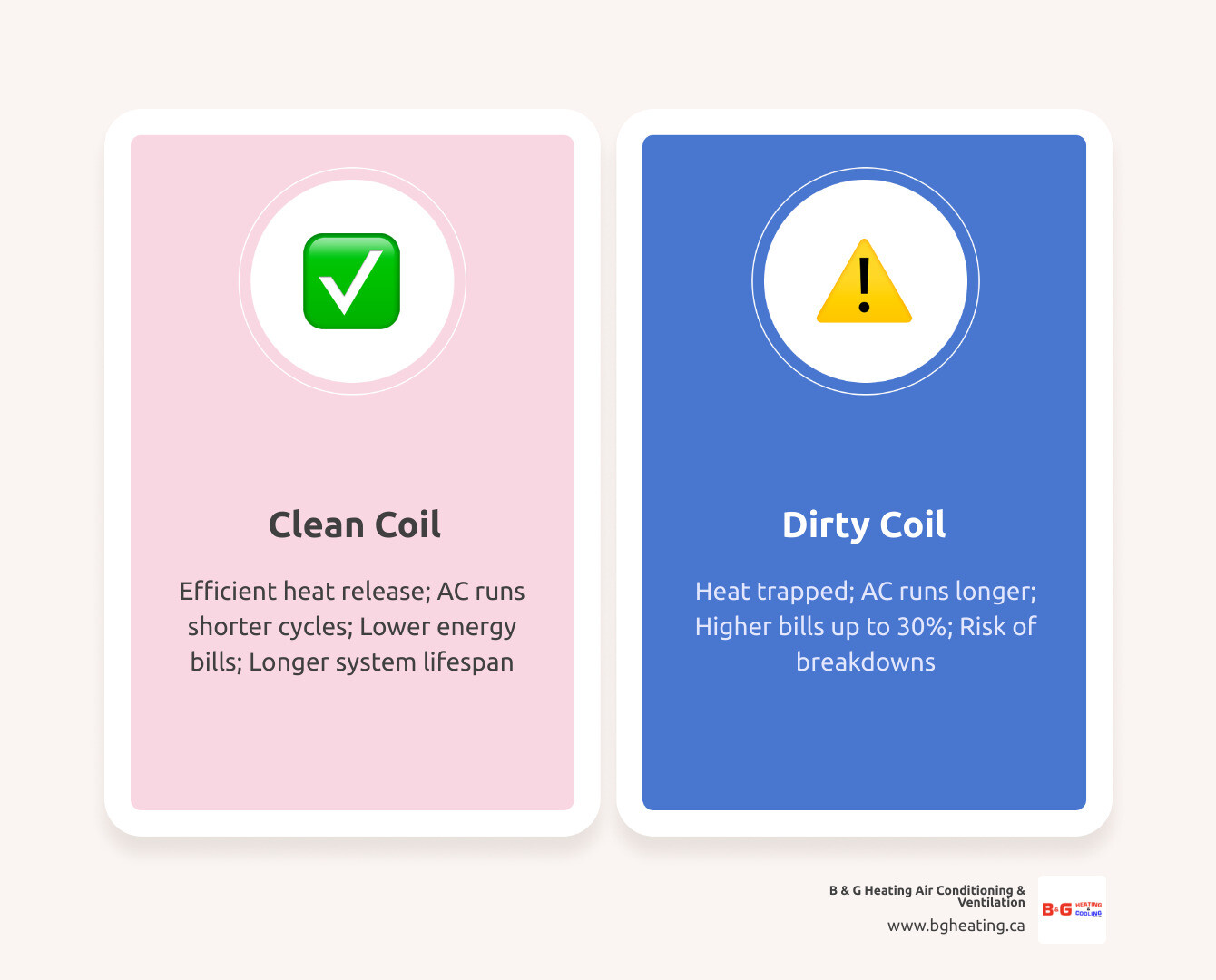
The condenser coil sits inside your outdoor unit and does one critical job: it releases the heat your AC pulls from inside your home into the outside air. When dirt, pollen, cottonwood seeds, or grass clippings coat those coils, heat gets trapped. The system works harder, runs longer, and wears out faster. According to U.S. Department of Energy data, dirty coils can push energy consumption up by as much as 30% — and in extreme cases even higher.
The good news is that many of these symptoms are fixable, and catching them early makes all the difference.
What is an AC Condenser Coil and Why Does it Get Dirty?
To understand why your air conditioner is struggling, we first need to look at the “heart” of the outdoor unit. The condenser coil is typically a large, wrap-around component made of copper tubing and hundreds of tiny aluminum fins. Think of these fins like a radiator in a car; they are designed to provide as much surface area as possible so that heat can escape quickly.
In the cooling cycle, your indoor evaporator coil absorbs heat from your living room, kitchen, and bedrooms. This heat is carried outside via refrigerant to the condenser coil. A large fan on top of the outdoor unit pulls air through these aluminum fins, stripping the heat away from the refrigerant and blowing it into the sky.
However, because this unit lives outdoors in places like Burlington, Oakville, and Stoney Creek, it is constantly exposed to the elements. Here is why those coils get so dirty:
- Environmental Debris: Leaves, twigs, and dirt naturally blow into the unit.
- Grass Clippings: If you mow your lawn and the side discharge points toward the AC, you are essentially “plastering” the coils with wet grass.
- The “Cottonwood” Effect: In many parts of Ontario, late spring brings a flurry of cottonwood seeds. These fluffy white seeds act like a thick wool sweater for your AC, completely blocking airflow.
- Pollen and Dust: Even invisible particles can build up over time. Research shows that a layer of dirt only 0.042 inches thick can reduce your system’s efficiency by a staggering 21%.
When you Boost Your AC Efficiency, you are essentially ensuring that this heat transfer process happens without any “insulation” getting in the way.
Identifying Dirty Condenser Coil Symptoms and How to Fix Them
If you are trying to figure out if your system is suffering from neglect or a mechanical failure, there are several red flags to look for. Recognizing dirty condenser coil symptoms and how to fix them starts with a simple visual inspection. If the silver or black fins on your outdoor unit look grey, fuzzy, or caked with mud, you’ve found your culprit.

Reduced Cooling Capacity
One of the first signs is that your home just doesn’t feel as crisp as it used to. Because the heat cannot escape the outdoor unit, the refrigerant returns to your indoor unit still “warm.” This means the air coming out of your vents won’t be as cold as it should be. You might notice the thermostat is set to 21°C, but the house never gets below 24°C.
High Head Pressure and Compressor Strain
When heat is trapped, the pressure inside the refrigerant lines rises. This is known as “high head pressure.” This forces the compressor—the most expensive part of your AC—to work much harder to move the refrigerant. Over time, this strain leads to premature failure. If you want to avoid Signs Your AC Needs Immediate Repair, keeping these coils clean is the best preventive measure you can take.
AC Not Cooling Effectively
When the system struggles to move heat, you’ll notice it simply can’t keep up with the Hamilton humidity. If you find your AC Not Cooling Effectively, the condenser coil is usually the first place our technicians look.
Common Dirty Condenser Coil Symptoms and How to Fix Them in Hamilton
Living in the Golden Horseshoe presents unique challenges. Between the industrial dust in some areas and the lush vegetation in the Escarpment, our AC units take a beating.
Skyrocketing Utility Bills
If your May or June energy bill looks like it belongs in the middle of a record-breaking July heatwave, check your coils. A dirty system can increase cooling energy consumption by up to 30% to 40%. The system has to run significantly longer to achieve the same cooling effect, and that extra electricity usage adds up fast.
Longer Cooling Cycles
Does it feel like your AC never turns off? A healthy system should cycle on, cool the home, and shut off. A system with dirty coils will run for hours on end because it is only “half-cooling” the air. This constant operation accelerates the wear and tear on every single moving part in the unit.
Warm Air from Vents
If the air coming out of your registers feels lukewarm, the heat transfer process has broken down. By the time the refrigerant reaches the indoor coil, it hasn’t released enough heat outside to be able to absorb more from your home.
Ice Buildup on Refrigerant Lines
It sounds counterintuitive—how can a dirty outdoor unit cause ice? When the outdoor coil is blocked, the pressures in the system become imbalanced. This can lead to the indoor evaporator coil getting too cold and freezing the moisture in the air. If you see frost or ice on the copper pipes, shut the system off immediately to prevent liquid refrigerant from flooding back into and destroying your compressor.
Advanced Dirty Condenser Coil Symptoms and How to Fix Them for Better Efficiency
As the problem worsens, the symptoms become more “violent” for the machinery.
Short Cycling
Your AC might start turning on and off every few minutes. This is often because the internal temperature of the compressor is getting too high, causing a thermal overload switch to trip. Once it cools down slightly, it tries to start again, only to overheat once more. This is a “heart attack” for your air conditioner.
System Overheating and Safety Shutdowns
Modern high-efficiency units are smart. They have sensors that detect when head pressure or temperatures are reaching dangerous levels. If your unit suddenly goes dead on a hot day, it might be a safety shutdown triggered by a lack of airflow through the condenser. Learning How to Help Your Air Conditioner Run More Efficiently can prevent these emergency “lockouts.”
Step-by-Step Guide: How to Safely Clean Your Condenser Coils
If you’ve identified dirty condenser coil symptoms and how to fix them, you might be tempted to grab the garden hose. While DIY cleaning is possible for light maintenance, you must be extremely careful.
- Power Disconnection: Safety first! Go to your electrical panel and turn off the breaker for the AC. Additionally, pull the “disconnect” or “pull-out” switch located in the small box on the wall near your outdoor unit. Verify the unit is off by checking the fan.
- Debris Removal: Use your hands or a soft vacuum attachment to remove large leaves, spider webs, or grass from the outside of the unit. Be careful not to press hard; those aluminum fins bend very easily.
- Low-Pressure Rinse: Using a garden hose (NEVER a pressure washer!), spray the coils. The best method is to spray from the inside out to push the dirt back the way it came. If you can’t take the top off the unit, spray at a 45-degree downward angle.
- Soft-Bristle Brush: For stubborn spots, a very soft brush (like a paintbrush) can help dislodge dirt. Never use a wire brush.
- Fin Straightening: If you notice areas where the fins are flattened or bent, you can use a “fin comb” tool to gently straighten them. This restores the airflow path.
- Clearance Maintenance: Ensure there is at least 2 to 3 feet of clear space around the entire unit. Trim back shrubs, move mulch, and ensure no tall grass is growing against the base.
By performing this simple maintenance, you are actively Prolonging AC System Lifespan and keeping your summer comfort high.
When to Call a Professional for Coil Maintenance
While a light rinse is great for a homeowner to do once a month, there are times when you need the pros from B & G Heating.
- Heavy Grease or Grime: If your AC is near a kitchen exhaust or a busy road, the coils can become “greasy.” Water won’t fix this; it requires specific, non-acidic chemical foaming cleaners that must be handled and neutralized correctly.
- Delicate Fin Repair: If more than 10-15% of your fins are bent, the airflow is severely compromised. Straightening thousands of tiny fins is a tedious job that requires professional tools.
- Refrigerant Leak Detection: Sometimes, what looks like “wet dirt” on a coil is actually a mixture of dirt and refrigerant oil. This indicates a leak. If you suspect a leak, you need a licensed technician, as handling refrigerant requires specialized certification.
- Electrical Component Safety: During a professional AC Maintenance Tune-Up Hannon On, we don’t just clean the coils. We check the contactor, the capacitor, and the fan motor to ensure the entire system is healthy.
We cannot overstate The Importance of Air Conditioner Servicing. A professional cleaning is much deeper than what a garden hose can achieve, often reaching the “sandwich” layer of dirt trapped between the fins that you can’t see from the outside.
Frequently Asked Questions about Dirty AC Coils
How often should I clean my condenser coils in Ontario?
For most homes in the Hamilton and Burlington areas, a professional deep clean once a year (usually in the spring) is perfect. However, if you have a lot of cottonwood trees or you live near a construction site, you should visually inspect your unit once a month and give it a light rinse if you see buildup.
Can a dirty coil cause my air conditioner to freeze up?
Yes! As mentioned earlier, a dirty outdoor coil causes a pressure imbalance that can lead to the indoor evaporator coil dropping below freezing. This creates a block of ice that stops all airflow, effectively “suffocating” your cooling system.
Will cleaning my coils significantly lower my energy bills?
Absolutely. In extreme cases of contamination, we have seen energy bills drop by 30% or more after a thorough coil cleaning. Because the system doesn’t have to work as hard or run as long, the savings are immediate and noticeable.
Conclusion
At B & G Heating Air Conditioning & Ventilation, we’ve seen how a little bit of dirt can lead to a whole lot of trouble. Whether you are in Ancaster, Dundas, or Grimsby, your air conditioner is a major investment. Understanding dirty condenser coil symptoms and how to fix them is the first step in protecting that investment and ensuring your family stays cool all summer long.
Don’t wait for your system to shut down during a 30°C humidity spike. Preventive care is the key to system longevity and lower monthly costs. The Benefits of Preventive AC Maintenance far outweigh the inconvenience of a mid-summer breakdown.
If your AC is showing signs of struggle, or if it’s been more than a year since your last professional cleaning, our team of experts is ready to help. We serve the entire region from Kitchener to Niagara-on-the-Lake with the same commitment to quality that has made us a local favorite for years.
Schedule your professional AC maintenance today and let us help you breathe easier and stay cooler!